
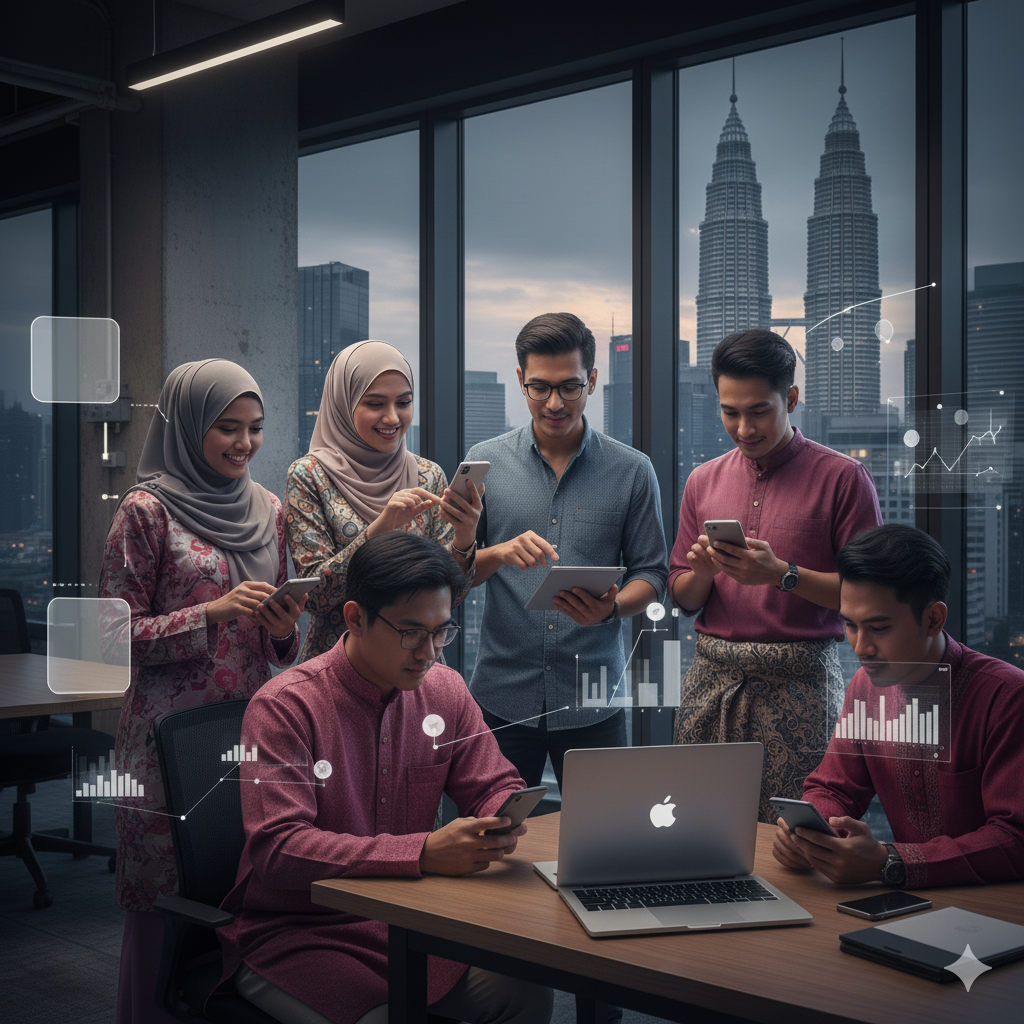
In Malaysia’s dynamic digital landscape, where 82% of the population actively engages on social media [8], brands are discovering gold mines of opportunity hidden within everyday online conversations. Social listening has evolved from a simple monitoring tool into a strategic powerhouse that’s fundamentally changing how Malaysian businesses identify and capitalize on untapped market opportunities.
The transformation is remarkable. From automotive giants like Proton and Honda to cosmetics brands like Rimmel launching in Southeast Asian markets, companies across Malaysia are leveraging social intelligence to uncover insights that traditional market research simply cannot capture. Here’s how social listening is revolutionizing market opportunity discovery in ten powerful ways.
1. Uncovering Consumer Pain Points before Competitors Do
Malaysian brands are tapping into the 96% of brand conversations that happen without direct tags or mentions. This invisible layer of consumer dialogue reveals authentic frustrations and unmet needs that formal surveys miss entirely.
Take the automotive sector as an example. When Berkshire Media analyzed over 20 car brands in Malaysia, they discovered that 44.98% of consumer conversations centered on vehicle performance concerns specifically oil tank leaks and display meter errors in national car brands [9]. These weren’t complaints lodged through official channels; they were organic discussions among Malaysian consumers on forums and social platforms.
By monitoring phrases like “looking for recommendations” or industry-specific pain points, brands can identify market gaps in real-time. A chocolate brand tracking “birthday gift ideas” or a sports retailer monitoring “best running shoes Malaysia” can intercept consumers at the exact moment they’re seeking solutions before they’ve committed to a competitor.
2. Detecting Emerging Market Segments through Conversation Analysis
Social listening tools in Malaysia are revealing customer segments that demographic data alone would never expose. The data tells fascinating stories about who’s buying what and why.
Analysis of Malaysia’s automotive market revealed that young buyers under 28 years old drive the most social conversations about national car brands [10], particularly around topics like sporty design, accessible loan financing (up to 9 years with zero down payment) [10], and attractive pricing. This wasn’t identified through traditional market segmentation it emerged from analyzing conversation patterns, emoji usage, and engagement metrics across platforms.
Similarly, when Nescafe Dolce Gusto wanted to strengthen its position in Malaysia, social listening helped identify unexpected customer segments based on lifestyle preferences and consumption occasions rather than standard demographics. The brand could then craft hyper local campaigns that resonated deeply with these discovered audiences.
3. Capitalizing on Real-Time Trend Identification
In Malaysia’s fast-moving digital environment, being first to spot a trend can mean the difference between market leadership and playing catch-up. Social listening provides brands with early warning signals about shifting consumer interests.
When Wendy’s tracked rising concerns about sodium intake and noticed the overwhelmingly positive sentiment around “sea salt” compared to regular “salt,” they didn’t just gather data they acted on it. Their sea salt fries campaign succeeded precisely because social listening identified the trend before it became mainstream knowledge.
Malaysian brands can apply this same approach. Monitoring spike patterns in mentions, tracking hashtag evolution, and analyzing conversation velocity helps brands spot emerging trends in their infancy. Whether it’s a new fitness movement like aerial arts or changing attitudes toward sustainable products, social listening puts Malaysian businesses ahead of the curve.
4. Identifying Geographic and Cultural Micro-Opportunities
Malaysia’s multicultural landscape creates unique micro-markets that are invisible to broad-stroke market research. Social listening reveals these hyper local opportunities by analyzing conversations in Bahasa Malaysia, English, Mandarin, Tamil, and various Malaysian dialects.
The technology can detect location-specific preferences, regional slang, and cultural nuances that signal untapped opportunities. A food brand might discover that certain product attributes resonate differently in Penang versus Johor Bahru, or that festival-related purchase behaviors vary significantly between different Malaysian communities.
Lion & Lion’s success in launching Rimmel in Malaysia demonstrates this perfectly. By listening to local beauty conversations, they developed a hyperlocal digital strategy that understood Malaysian beauty standards, preferences, and cultural contexts. Within the first month, they drove over 130,000 engagements and ranked third in category share of voice within a year all by identifying and capitalizing on cultural micro-opportunities through social listening [10].
5. Mining Competitor Weaknesses for Market Entry
Social listening transforms competitive intelligence from periodic market reports into continuous strategic advantage. Malaysian brands are monitoring competitor mentions to identify dissatisfaction patterns and service gaps that represent golden opportunities.
When social analytics showed that certain car brands faced repeated complaints about after-sales service or spare parts reliability, competing brands could address these exact pain points in their marketing and product positioning. The data revealed that 13.46% of automotive purchase decisions in Malaysia hinge on after-sales service intelligence that helps brands differentiate themselves precisely where competitors fall short.
This approach works across industries. By tracking sentiment around competitor products, monitoring complaint patterns, and analyzing what customers wish their current brands would do differently, Malaysian businesses can enter markets with solutions perfectly tailored to existing frustrations. It’s not just about being better it’s about being better in the exact ways that matter most to dissatisfied customers.
6. Validating Product Development before Launch
Traditional product development in Malaysia often relied on focus groups and surveys, which are expensive, time-consuming, and sometimes misleading. Social listening provides continuous, authentic validation throughout the product development cycle.
Malaysian automotive brands now use social analytics to gauge consumer preferences on specific attributes before launching new models. Data showed that price dominates at 48.75% of purchase decision factors, followed by design at 18.77% and after-sales service at 13.46%. But social listening revealed something deeper consumers weren’t just price-sensitive; they wanted specific combinations of attributes like “sporty design with practical interior layout” or “safety features at affordable price points [9].”
This granular insight allows brands to shape product features around precisely what Malaysian consumers want most. Instead of guessing which attributes to prioritize, companies can validate decisions against thousands of real consumer conversations, reducing launch risk and increasing market fit.
7. Discovering Unexpected Use Cases and Benefits
One of social listening’s most powerful capabilities are revealing how customers actually use products versus how brands think they’re being used. These unexpected insights often unlock entirely new market opportunities.
The healthy meal kit company that discovered customers praised their products as “kid-friendly” and “perfect for picky eaters” hadn’t specifically marketed to parents. But social listening revealed an organic market perception that became the foundation for an entire new campaign targeting parenting and wellness influencers.
In Malaysia’s context, brands monitoring conversations might discover their products being used during specific cultural celebrations, being popular among unexpected age groups, or solving problems the brand never intended to address. These discoveries don’t just refine marketing they can spawn entirely new product lines or market positions.
8. Identifying Influencer and Partnership Opportunities
Malaysian brands are using social listening to move beyond follower counts and find authentic brand advocates who genuinely resonate with their target audiences. The most effective influencers aren’t always the biggest they’re the ones having the right conversations with the right people.
Social listening tools can identify opinion leaders based on engagement quality, audience alignment, sentiment they generate, and conversation relevance. When Berkshire Media analyzes automotive conversations, they identify key influencers like Paul Tan (car review blogs) who drive significant user engagement and purchasing conversations, but they also identify emerging micro-influencers who might offer better ROI for specific campaigns.
This approach helps Malaysian brands avoid expensive influencer misfits. Instead of partnering with celebrities who have large but misaligned audiences, companies can identify everyday users who are already brand advocates, industry experts whose opinions carry weight, or emerging content creators whose audiences perfectly match target segments.
9. Predicting Customer Journey Touch points
Understanding where Malaysian consumers are in their buying journey allows brands to intervene with precisely the right message at exactly the right time. Social listening maps these journeys in ways traditional analytics cannot.
Research on major car brands in Malaysia showed that 62% of consumers are fully aware of pricing and safety features, but only 17.7% express purchase interest and just 1.28% are serious about testing vehicles. This journey mapping revealed critical intervention points where brands could influence decisions [9].
For existing customers, social listening revealed that brand loyalty remains high, with only 0.22% expressing interest in switching brands [9]. Toyota and Honda demonstrated this loyalty effect, with many customers willing to trade up to new models while sticking with the same brand. Understanding these journey dynamics helps Malaysian brands optimize resource allocation investing heavily in awareness might matter less than focusing on the consideration and evaluation phases where decisions actually happen.
10. Measuring Real Marketing Impact beyond Vanity Metrics
Malaysian brands are moving beyond likes and shares to understand genuine market impact. Social listening connects online conversations to actual business outcomes, proving ROI in ways that traditional metrics cannot.
When Proton, Toyota, and Honda tracked their social engagement against sales data, they discovered strong correlations between meaningful online conversations (not just volume) and showroom visits. This allowed them to distinguish between viral content that generates empty buzz and strategic content that drives business results.
Social listening also reveals conversation barriers the concerns that prevent purchases despite high awareness. For Malaysian automotive brands, this meant understanding that performance reliability concerns (44.98% of barriers) and safety feature doubts (31.47%) were actively preventing sales [9]. Addressing these specific concerns in marketing and product communication became measurable through sentiment shifts and conversion rate improvements.
Building Sustainable Competitive Advantage in Malaysia’s Digital Economy
The Malaysian digital landscape moves at incredible speed. With high social media penetration, multiple languages, diverse cultural contexts, and rapidly evolving consumer preferences, brands need intelligence that traditional market research cannot provide fast enough.
Social listening has become the foundation for agile market strategy. It provides continuous intelligence rather than periodic snapshots, reveals authentic consumer sentiment rather than prompted responses, and identifies opportunities in real-time rather than retrospectively.
For Malaysian brands willing to invest in sophisticated social listening capabilities combining the right tools with cultural understanding and strategic analysis the payoff is transformative. They’re not just reacting to markets; they’re anticipating them. They’re not competing for known opportunities; they’re discovering hidden ones before competitors even realize they exist.
The question for Malaysian businesses isn’t whether to adopt social listening it’s whether they can afford not to. In a market where consumer conversations reveal more than surveys ever could, where trends emerge and fade within weeks, and where cultural nuances create countless micro-opportunities, social listening isn’t just another marketing tool. It’s the competitive intelligence system that separates market leaders from followers.
The brands winning in Malaysia today aren’t the ones with the biggest budgets they’re the ones who listen best, understand deepest, and act fastest on the insights hidden in millions of daily conversations happening across Malaysian digital spaces. Social listening has transformed from a nice-to-have monitoring function into the strategic core of modern market discovery. And for Malaysian brands ready to embrace this transformation, the hidden opportunities are enormous.
References
1.Social Listening Tool for Malaysian Businesses | Mediapod
2.https://blueniaga.com/top-social-listening-tools-in-malaysia-for-effective-branding/
3.https://www.linkedin.com/pulse/malaysia-social-listening-tools-market-size-key-players-gquwe
5.https://www.talkwalker.com/resource/case-studies/how-lion-and-lion-helped-launch-rimmel
6.https://determ.com/blog/complete-guide-to-social-listening/
7.https://www.shopify.com/my/blog/social-listening