

In the fast-paced world of marketing, A single misstep can transform a campaign from genius to catastrophe within hours. Malaysia has witnessed several high-profile marketing failures that could have been avoided with effective social listening tactics. Let’s take a look at three prominent examples and discuss how brands can leverage social listening to avoid similar pitfalls.
Watsons Malaysia’s “Blackface” Raya Advertisement
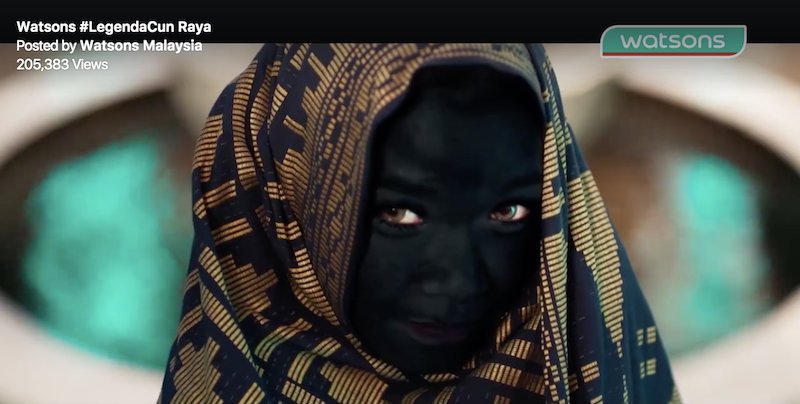
Watsons Malaysia, a popular pharmacy chain outlet, posted a 15-minute Hari Raya Aidilfitri video in June 2017 titled “Legenda Cun Raya” (Beautiful Raya Legend). The advertisement featured numerous Malaysian celebrities and retold the story of a Malay folklore character, Dayang Senandong. However, the video received negative criticism as one of the scenes showed a woman taunted in blackface before she was stripped of the cosmetics and revealed paler skin. The following caption was: “Only at Watson’s you’ll be beautiful.”
The ad faced immediate and intense criticism from the public. Social media erupted, with accusations of racism, sexism, and cultural insensitivity. Twitter and Facebook audiences labeled the advertisement as “racist,” “tasteless,” and “distasteful,” and accused the advertisement of promoting colorism and spreading the beauty standard that connects fair skin with beauty. Watsons Malaysia quickly removed the video and issued an apology statement. It was mentioned:
“Regretfully, we acknowledge that the ‘Legenda Cun Raya’ video is not in-line with the values that we hold dearly in Malaysia. Watsons Malaysia takes responsibility for the video and its content and is truly sorry that some elements have offended the general public.” [1]
How Social Listening Could Have prevented this.
Social listening platforms can offer valuable information before and even while running a campaign to make it resonate well with the audience. In Watsons Malaysia’s ad, using social listening, the potential for controversy of the campaign would have been detected way before time. This is how it could have helped them:
- Sentiment Analysis on Beauty Standards: By monitoring ongoing discussions about colorism, beauty standards, and racial sensitivity in Malaysia and Southeast Asia, Watsons could have recognized that there was growing awareness and rejection of messages that glorify fair skin while undermining darker tones.
- Cultural Sensitivity Monitoring: Social listening would have detected past conversations regarding Raya campaigns, establishing the successes or failures of past cultural representation. This would have assisted in gaining an understanding of the Malaysian audience’s sensitivities, particularly when it involved issues of race and beauty standards.
- Competitive Intelligence: Tracking reactions to other brands’ similar campaigns would have provided warning signs regarding pitfalls, particularly when dealing with sensitive subject matter such as blackface or skin-lightening narratives.
In formulating the campaign, Watsons Malaysia may have used social listening to identify potential issues with their “Legenda Cun Raya” ad. By conducting conceptual testing in focus groups or tracking early opinions from influencers and leaders in communities, they may have cued weaknesses before launching a campaign. Monitoring discussions regarding beauty expectations and racial insensitivity would have informed Watsons of the importance of proper representation and sensitivity to culture.
Social listening tools and Facebook Audience Insights would have enabled Watsons to listen to sentiments and trends in real time. These tools may provide useful insights regarding what the public thinks about matters, especially sensitive ones like colorism and discrimination. Keeping up with relevant hashtags and engaging with diversity advocates could have ensured the campaign aligned with audience expectations.
To prevent crises, Watsons might have set up keyword alerts and a crisis detection system to pick up on negative sentiment early. With a cultural advisory panel to review insights and advise changes, the campaign would have been culturally sensitive. By including these strategies, Watsons might have avoided the backlash of their 2017 Raya ad and resonated with their audience.
MAS Airlines’ “Bucket List” Promotion
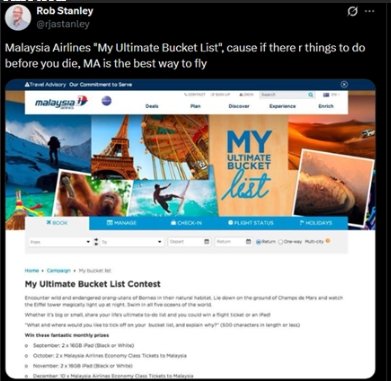
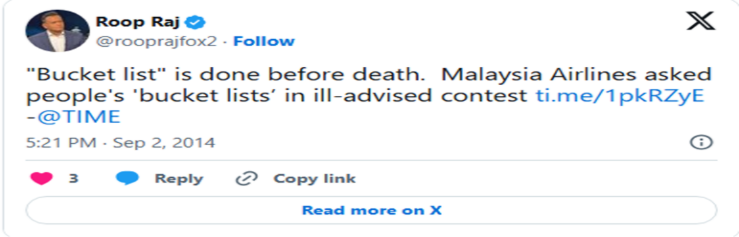
Malaysia Airlines introduced the “My Ultimate Bucket List” promotion in September 2014, calling for customers to submit their bucket-list travel destinations. The competition, with rewards of iPads and economy-class airline tickets, was designed to engage the public following the recent tragedies of Flight MH370 (March 2014) and Flight MH17 (July 2014). However, the use of the term “bucket list,” referring to things one wants to do before they die, became highly problematic given the recent deaths of 537 passengers in those tragic events.
The campaign quickly faced intense criticism for being tone-deaf and insensitive. International media condemned the promotion, and Danica Weeks, the wife of a passenger of MH370, called it “atrocious [4].” Individuals noted the irony of an airline asking about bucket lists following the recent loss of so many lives. Malaysia Airlines later changed the campaign name to “My Ultimate To-Do List” and Malaysia eventually removed all references to “bucket lists” from their advertising campaigns.
Social listening tools could have prevented the backlash by giving crucial insight into what the people felt.
- Crisis Impact Analysis: Monitoring public discussion regarding the airline would have revealed that the people remained focused on grief, loss, and questions regarding safety even after the disasters. This would have predicted that any careless advertising campaign would most likely be seen as insensitive.
- Keyword Association Monitoring: Tracking keywords such as “bucket list” with Malaysia Airlines or death-related words would have picked up the negative associations real-time with social listening tools.
- Stakeholder Sentiment Tracking: Monitoring the sentiment of the victim families, aviation communities, and flying public would have shown that Malaysia Airlines needed to address the issue of trust first before embarking on promotional campaigns.
Strategic Timing Analysis: Social listening information could have shown that public sentiment had not yet recovered from the tragic of MH370 and MH17 and that September 2014 was too soon to launch a promotional campaign [4]. A review of others’ actions during comparable crisis situations would have given Malaysia Airlines some guidance on the message and timing for their turnaround campaign.
Actionable Strategy for Future Campaigns: To avoid similar crises, Malaysia Airlines could implement continuous sentiment monitoring to understand recovery patterns and ensure public trust before launching any campaigns. Setting up semantic analysis alerts for potentially insensitive terms, establishing a grief cooling-off period, and monitoring victim support groups would help prevent missteps. Additionally, competitor analysis could offer valuable insights into how to recover and rebuild the brand after a crisis. These strategies would have aligned Malaysia Airlines’ marketing efforts with public sentiment, ultimately preventing the backlash from their “My Ultimate Bucket List” campaign.
Reference
1.Watsons Malaysia apologises for ‘Legenda Cun Raya’ video
2.Watsons Malaysia’s blackface Raya ad labelled racist by netizens | Marketing-Interactive
4.Watsons’ Blackface Ad Controversy—How They Could Have Done Better
5.https://www.theguardian.com/world/2014/sep/03/malaysia-airlines-bucket-list-promotion-mh370-mh17?
6.Malaysia Airlines Scraps Ill-Conceived ‘Bucket List’ Promotion